
Wanted Is Not Current Custody
A wanted notice and a custody roster are not the same thing. The Cleveland County Most Wanted record is an agency notice. The inmate inquiry shows who the Detention Center holds right now. Someone can be wanted yet not booked. A roster entry can vanish after release while a court case stays open.
For custody questions beyond the county, use the North Carolina Department of Adult Correction offender search. NCDAC handles state prison, probation, and parole. It is not a local jail roster. Federal or immigration custody runs through a different agency entirely.
For the outcome of a case, the North Carolina eCourts Portal is the tool. A warrant notice, a booking charge, and a court disposition are separate records with separate custodians.
Source Check Before Sharing
Verify a wanted notice before you share it. Compare the name, age, physical description, and wanted-for text against the live Sheriff source. A copied social post may be months old. A private page might list a similar name or keep showing a record after an arrest. Save the original URL so others can check it too.
The Sheriff's home page connects Most Wanted to Crime Stoppers, its app, media releases, crime maps, statistics, and social accounts. Those channels help a public-safety inquiry, but none replaces the court clerk or the originating record. If an entry seems to describe someone you know, follow the official contact instructions and keep your guess off the internet.
What a Cleveland County Notice Means
A Most Wanted entry is a public agency notice asking for help locating or identifying a person, not a full case history. It does not tell you the person is in Cleveland County now. It does not tell you the listing still stands. The live P2C page can change at any time, with no posted timetable.
That distinction matters most when the same name shows up in a booking story. The inmate inquiry reflects current county detention. The Daily Bulletin covers selected public-safety events by date. The court portal tracks later case activity. A person can be released before any disposition, or a wanted record can come down after an arrest while the court case is still open.
When identity is uncertain, stop there. Do not track the person down, publish a guess, or treat a similar name as confirmation. Send what you know through the official tip channel and let law enforcement sort it out.
Checking a Listed Person Safely
Confirming a listed person's status is a job for the responsible office. Skip the confrontation and the private website. The Cleveland County court contact directory lists clerk and magistrate routes. The Sheriff's directory offers a non-emergency number. An attorney can explain the safest lawful path when the worry is a possible warrant involving the person asking.
A county records request can retrieve an existing record, but it is no substitute for urgent safety or legal help. Never announce a warrant through a public comment, social message, or news tip. Those channels spread mistaken identities and settle nothing in court.
Match the question to the custodian. Booking questions go to the county roster, then the court record. State-prison questions go to NCDAC. Federal or immigration custody calls for the responsible federal locator.
Cleveland County's Wanted List
The official Cleveland County P2C Most Wanted page is separate from the jail-inmate inquiry and maintained through the Sheriff's system. The list can hold a single entry or several. Names get added, arrested, removed, or reclassified, and no update schedule is posted.
A listing may display an agency-provided identification image. The result varies from one entry to the next, so not every image is a booking photo. The listing does not place a person in Cleveland County today. The source itself carries an age or date disclaimer tied to the information it presents.
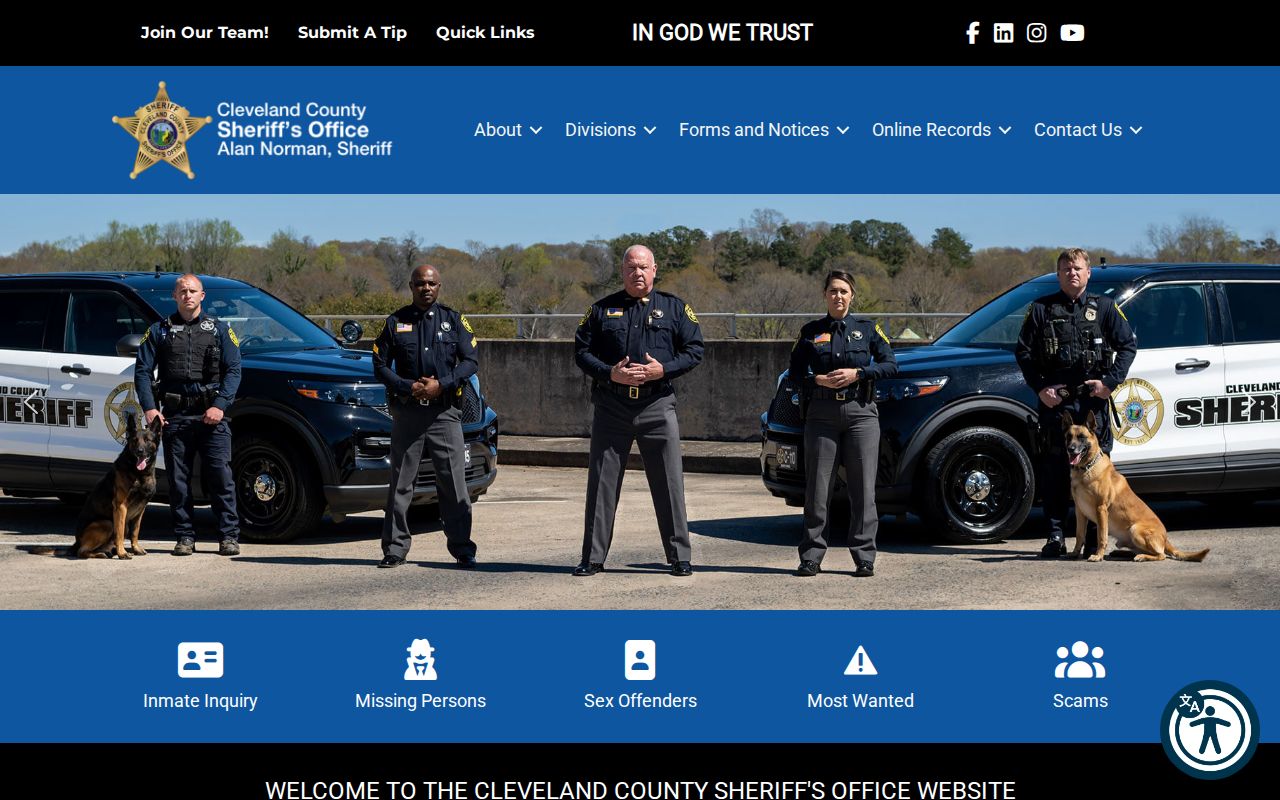
The official Most Wanted interface is the source for the current public listing.
Fields on a Wanted Listing
A wanted listing carries enough detail to tell an agency notice apart from a current jail record. What actually appears depends on the live entry. The fields below reflect the Cleveland County interface.
| Field | What it shows |
|---|---|
| Name | The person's name as displayed by the P2C wanted record. |
| Race and sex | Descriptive fields shown in the listing. |
| Age | The age shown with the record, subject to the page's age or date notice. |
| Height and weight | Physical description fields that may help identify the correct person. |
| Wanted-for description | The text supplied for the wanted basis or public description. |
| Physical characteristics | Additional identifiers when the current record contains them. |
| Tip number | The number or tip direction displayed by the agency entry. |
A wanted listing is a snapshot of details, not a live answer. It won't tell you if a warrant is still active, whether the person has since been arrested, or how a court ruled. Those questions go to the office that issued the notice. Be careful with name matches, too. Age and physical descriptions can go stale, so a shared name alone proves little.
How to Read the Wanted Notice
Treat the list as what it is: a public notice from law enforcement. It is not an invitation to confront anyone or play detective. Keep three questions separate when you read it. Where did the notice come from? Is the identity solid? What is the current custody status? Answering each one through official channels keeps you on safe ground.
- Open the Sheriff's P2C Most Wanted page and note the date you viewed it.
- Read the name, description, wanted-for text, and any agency disclaimer as a single record.
- Compare identity details carefully. Do not assume a similar name is the same person.
- If you have useful information, use the official tip route. Do not follow, threaten, detain, or approach the person.
- If the question is a booking or current custody question, use the county roster and records path, then read the court file for later disposition.
The roster and the wanted list are two different systems. They don't always agree. Someone can vanish from a roster after a release or transfer, while their wanted notice stays up or shifts for unrelated reasons. Don't blend the two into one combined list. For a county-wide record search, start with the Cleveland County search page.
Crime Stoppers Tips and Rewards
The Sheriff's Crime Stoppers page outlines a citizen-run program. It offers secure P3 submissions and anonymous follow-up through a personal code. Cash rewards can reach $1,000 for information that leads to an arrest. A recent public post also listed (704) 481-TIPS (8477). Numbers can shift between posts and tip pages. Verify the active one at the official source before you call.
Tip route
Cleveland County Crime Stoppers
Submit tips through the official page or the secure P3 submission route.
Rewards can reach $1,000 when a tip leads to an arrest.
Never use a tip channel to track or confront a wanted person.
A tip gives law enforcement something to work with. That's its whole job. Emergencies need emergency services, not a delayed web form. The Sheriff app and social accounts do carry selected alerts, though there's no promise that every wanted notice or booking shows up there.
The Sheriff's Crime Stoppers page explains the county's tip infrastructure.
Wanted List or Warrant Check?
Cleveland County's P2C system publishes a Most Wanted list. But no general public portal for searching warrants by name has been identified. Remember that a wanted list is curated. An active warrant may never make it onto the page. For a check on a specific person, go through the court, the magistrate, or the Sheriff directly. Bring in an attorney if the question involves you personally.
| Question | Use this route | What it does not prove |
|---|---|---|
| Is the person on the Sheriff's public wanted list? | P2C Most Wanted | It does not prove current custody or guilt. |
| Could a specific warrant exist? | Cleveland County Clerk, magistrate, or Sheriff's non-emergency route | A web absence does not prove no warrant exists. |
| What happened to a charge? | North Carolina eCourts and the clerk | A booking charge is not a final disposition. |
- Start with the official Most Wanted page only to see whether an agency notice is displayed.
- For a warrant question, contact the Cleveland County court directory, the magistrate, or the Sheriff's non-emergency line for current instructions.
- Ask an attorney about the legal consequences and a safe way to resolve the matter. Do not rely on a private database.
- Use the county roster separately if the question is current detention, and eCourts for case events.
Safety first. Never approach, follow, threaten, or try to detain anyone named on a wanted page. Pass what you know to law enforcement. Let them handle it.